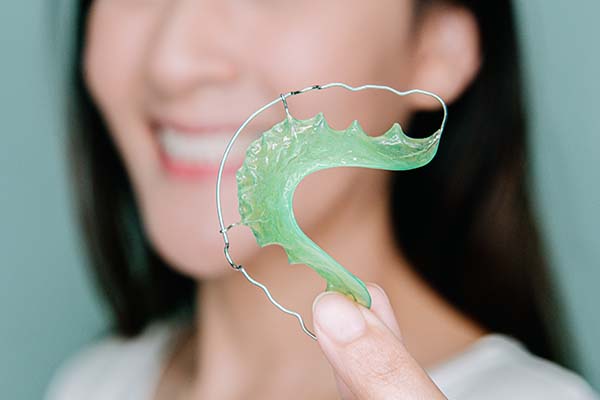
 It might be disconcerting to wear a retainer after the orthodontist removes your braces, but it is a necessary process. Despite you completing a comprehensive orthodontic treatment, your teeth will begin to shift afterward. Wearing a retainer forces your teeth to stay in their new place for a more extended period for optimal outcomes.
Getting retainers
Some orthodontic patients only require one retainer on the bottom or top, while others may need both. After the first few days of wearing it all day, patients will most likely only have to wear the retainer at night while sleeping. It is important to remember that each treatment plan is unique, however.
There are two types of retainers: detachable and fixed. Removable retainers are typically worn for a year, but fixed retainers might be worn for several years. Cement is used to bind fixed retainers to the backs of the teeth. Although clear plastic can also be used, retainers made of acrylic are the most prevalent, especially among adults who prefer a less conspicuous option. Acrylic retainers are adjustable and constructed of flexible wire and acrylic. They are also available in various colors and styles.
Tips for using retainers
Patients may feel pressure and discomfort while their mouth adjusts to the retainer, much like they did when they first started regular orthodontic treatment. Inform the orthodontist if the retainer causes pain or cuts in the gums. It most likely needs to be readjusted.
For the first couple of days, one’s speech will be impacted. Patients need to slow down their manner of speaking until they are comfortable with the sensation of the retainer in their mouth. It might also be beneficial to read aloud for a few minutes a day. During the first few days, the retainer may increase saliva production in the mouth. This is to be expected.
The key to getting the most out of the retainers is to look after them properly. Patients need to follow all the orthodontist's recommendations for optimal outcomes. Since retainers are created to order, the dentist’s instructions are important.
Clean the retainer
Maintain the cleanliness and freshness of the retainer. Since plaque, germs, and residual food particles will accumulate on the retainer due to it being in the mouth all day, it is critical to keep it clean and fresh at all times.
To clean the acrylic retainer, rinse it with warm water several times a day to remove bacteria buildup. Also, disinfect it at least once a week by immersing it in distilled water with a pinch of baking soda or a drop of castile soap. The clear retainer requires a bit more attention. Rinse it out with warm water after each removal, but scrub it with a drop of dish soap and a soft-bristle toothbrush.
Never put toothpaste on the retainers because it will scrape them and change their appearance, making you self-conscious when you smile. Do not submerge them in boiling water. Avoid eating with the retainers on to avoid discoloration. Keep the retainers in a case while they are not in use, to prevent them from becoming scratched or misplaced.
In conclusion
If you need more information about retainers and how to care for them, contact the dental office to book an appointment with the orthodontist.
Request an appointment or call FitSmiles Orthodontics at 714-782-0217 for an appointment in our Tustin office.
Related Posts
To straighten crooked teeth, braces are a viable and effective treatment. Teens and adults alike can benefit from this orthodontic care. If you are unhappy with your smile, you should speak with an orthodontist about whether you are a good candidate for this method. Your needs and goals will differ from other patients. Still, the…
Searching for an orthodontist near me can lead to a seamless transition to a healthier, more functional, and well-aligned smile. Modern orthodontic care offers much more than traditional metal brackets, so a localized search helps patients discover the latest in digital imaging and discreet treatment options. The best choice is to select a practice that…
Many people seek orthodontic treatment to repair smiles. Various issues can affect the way a person’s teeth and jaw look. Some people may have bite abnormalities. Other patients may come to an orthodontist because of crowding or gaps in the mouth. If you have crooked teeth, you are among a large number of patients seeking…